
Seller Education
Prop 19 Explained for California Sellers Age 55+ (and Families Helping Parents)
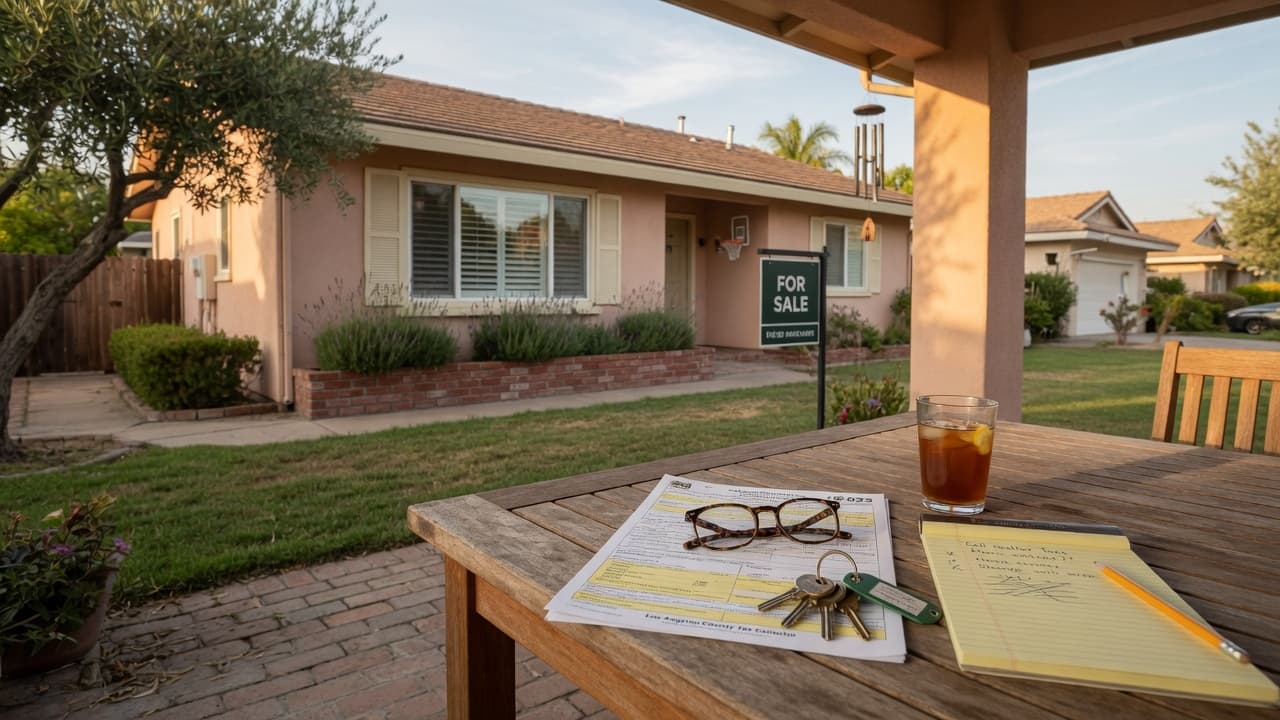
A plain-English overview of California Proposition 19 base year value transfers for homeowners 55 and older — primary residence rules, timing, and what adult children should know — educational only, not tax or legal advice.
If you are 55 or older and considering selling a long-held California primary residence — or you are an adult child helping a parent plan a move — you have probably heard that Proposition 19 can let you “take your property tax base with you.” That phrase is partly true in concept and often oversold in social media. Outcomes depend on whether both homes are primary residences, how sale and purchase dates line up, how values compare, and whether the correct claim is filed with the county assessor.
This article is general education only. It is not tax advice, legal advice, estate-planning advice, or a promise of any tax savings, assessment result, or eligibility. Proposition 19 is implemented under the California Constitution, Revenue and Taxation Code section 69.6, Board of Equalization guidance, and county assessor practice. Rules and forms change. For your address and family facts, consult a California tax professional or attorney and the county assessor where the replacement home will be located. Equal Housing Opportunity.
What “base year value” means in plain English
Under Proposition 13, most California real property has a base year value set when it last changed ownership or when new construction was completed, then limited annual inflation increases apply. Owners who bought decades ago often pay property taxes far below what a new buyer would face at today’s market value.
A base year value transfer (sometimes called portability) is a property-tax concept: if you qualify, the assessor may apply a transferred taxable value to a replacement primary residence instead of fully reassessing that new home as if you were a first-time purchaser at full market price. That does not freeze your sale price, create a rebate on the old home after it sells, or guarantee a lower tax bill than you pay today if you buy a much more expensive home.
Never treat a neighbor’s story or a viral “Prop 19 calculator” as a personal tax opinion. Assessors apply statutes and claim packages to specific parcels.
Who Prop 19 base year transfers often discuss (high level)
For homeowners, public BOE materials describe base year value transfer relief under Proposition 19 (effective for these transfers on or after April 1, 2021) for an owner of a primary residence who is at least age 55, severely disabled, or a victim of a wildfire or natural disaster (as defined), when other conditions are met. This post focuses on the age-55 path that many sellers and families ask about first.
Age is typically evaluated as of the sale of the original primary residence under BOE guidance — not only as of the day you start house hunting. Couples should not assume both spouses must be 55; assessor FAQs often discuss a qualifying owner-claimant who meets age and ownership tests. Confirm marital and co-ownership facts with counsel and the assessor, not a blog.
Disabled and disaster categories have separate claim forms and definitions. Do not mix those paths casually with “I am 55.”
Primary residence is not optional
Both the home you sell (original) and the home you buy or newly construct (replacement) are discussed in official materials as primary residences — not vacation homes, rentals held only as investments, or speculative flips. Eligibility for the homeowners’ or disabled veterans’ exemption (or being “eligible for” that treatment as principal residence) is a recurring theme in BOE FAQs.
If a parent still owns the house but has moved to assisted living, or an adult child is living there while title remains with the parent, “who occupies what as principal residence” can become the make-or-break fact. Guessing wrong is expensive. Get facts on title, occupancy, and exemption status before you list or write an offer strategy that depends on a transfer.
Replacement homes can be located anywhere in California under Prop 19 base year transfer rules (statewide portability replaced the old same-county / limited intercounty model under prior propositions). That does not remove county-specific filing: claims are generally filed with the assessor of the county where the replacement home sits.
Timing: sale, purchase, and the two-year window
At a high level, official summaries require that the original primary residence be sold and a replacement primary residence be purchased or newly constructed within two years of each other. Either event can come first. At least one of the sale or the replacement purchase/completion generally must occur on or after April 1, 2021 for Prop 19’s section 69.6 framework.
If you buy the replacement first, BOE materials note you may pay taxes based on the full fair market value of the new home until the original sells and the transfer is processed — and that interim period may not be refunded. Cash-flow planning matters as much as the eventual assessed value.
Filing is not “handled in escrow” by itself. BOE guidance states a claim is filed after both transactions are complete and you are living in the replacement home. Forms such as BOE-19-B (age 55+) are obtained from and filed with the assessor of the replacement county; public checklists often list a multi-year filing window after purchase or completion — missing deadlines or using the wrong form can forfeit or delay relief. Verify current forms and deadlines on boe.ca.gov and your county assessor’s site.
Equal or lesser value vs buying “up”
Prop 19 allows a transfer even when the replacement costs more than the original, but the math is not “old tax bill forever no matter what.” Public BOE explanations describe an “equal or lesser value” test with time-based percentages (for example, roughly 100% / 105% / 110% of the original home’s full cash value depending on whether the replacement is bought before the sale, in the first year after, or in the second year after). If the replacement’s full cash value is higher than that adjusted figure, the excess is generally added to the transferred base year value.
In other words: a larger, more expensive next home can still receive a transfer, but your new taxable value may rise by the step-up amount. Nobody can responsibly promise “you will save X dollars a year” without running your facts against current law and assessor practice.
Lifetime use is limited. Official comparisons often note up to three base year value transfers for age 55+ / disabled claimants under Prop 19 (disaster rules differ). Prior use of older Prop 60/90 relief does not automatically block all future Prop 19 uses under BOE FAQs — but count uses carefully with professionals.
A second Prop 19 topic families hear about: parent-to-child transfers
Proposition 19 also changed parent-child and grandparent-grandchild exclusions from change in ownership (often discussed when a home is gifted or inherited). That is a different relief path than the age-55 base year value transfer when a senior sells and buys another home.
Intergenerational rules commonly require a family home (or family farm) that becomes the child’s principal residence, with claim forms, homeowners’ exemption timing, and a value limit tied to factored base year value plus an inflation-adjusted amount (BOE publishes biennial adjustments — for example, amounts published for transfers in recent periods have been in the $1 million-plus range). Rentals that never become the child’s primary residence generally do not fit the family-home story.
Adult children helping parents should not collapse “Prop 19 inheritance exclusion” and “Prop 19 portability when Mom sells and downsizes” into one plan. Wrong assumptions about which path applies are a common source of surprise reassessment. Use an attorney for transfers of title, trusts, and death-related changes in ownership.
Practical steps for sellers 55+ and the family members helping them
Pull current assessor information for the original home: factored base year value, exemptions on file, and ownership of record. Compare that to a realistic sale price range from a licensed real estate professional — marketing value is not the same as assessed value.
Before you depend on a transfer, talk with a tax advisor or attorney about eligibility, and ask the replacement county assessor’s office how they process BOE-19-B (or the correct form for your category). Real estate licensees can coordinate timelines; they cannot determine your tax outcome.
Build a calendar: list date, close of sale, purchase or new-construction completion, move-in, claim filing, and cash for any interim full-value taxes on a buy-first sequence.
If parents need care, empty-home insurance, HOA rules, and Medi-Cal or estate issues may intersect with the real estate timeline — those are separate professional lanes (elder law, benefits, insurance). Do not “gift the house this weekend” based on a group chat.
Keep copies of closing statements, grant deeds, and claim filings. Assessor correspondence can arrive months later.
How this connects to listing and buying with a real estate team
Prop 19 planning often drives when a senior lists, whether they buy first or sell first, and how long they can tolerate dual housing costs. An agent can help sequence showings, contingencies, and local inventory realities in markets such as the Inland Empire and surrounding Southern California areas — without promising an assessed value.
If adult children will live with a parent on the replacement title, or if sale proceeds fund care, put those facts on the table early so financing, title, and tax professionals can review them. Surprises at the notary are expensive.
NJV Realty helps families map sell and buy logistics, local pricing, and transaction timing. We do not prepare BOE claims, calculate property tax bills, or give legal or tax opinions. We will encourage you to verify every Prop 19 assumption with the county assessor and licensed tax or legal counsel.
Key takeaways (read carefully)
Prop 19 base year value transfer for age 55+ is about transferring a taxable value to a replacement primary residence under strict conditions — not a guaranteed discount, rebate, or lifetime freeze at last year’s bill.
Primary residence status, two-year sale/purchase timing, value comparison rules, claim forms (such as BOE-19-B), and assessor processing all matter. Buy-first sequences can create interim full-value taxes.
Intergenerational (parent-child) exclusions are a related but separate Prop 19 topic; do not use one checklist for both.
No article, agent, or online calculator can guarantee tax savings. This post is educational only and may become outdated as law or BOE guidance is updated.
Start with official sources: California State Board of Equalization Proposition 19 pages (boe.ca.gov/prop19), Letter to Assessors guidance on base year value transfers, and your county assessor. Then consult a California tax advisor or attorney for personal advice. Equal Housing Opportunity.
If you are preparing to sell or help a parent sell in Corona, Eastvale, Temescal Valley, Diamond Bar, or nearby California markets, NJV Realty can discuss listing readiness and buy-side timing alongside your tax and legal team — without promising any property-tax result.
Thinking of selling? Get a professional CMA and a clear listing plan — not just an automated estimate.