
Buyer Education
Proposition 37 Passed: California Middle-Income New-Home Loan
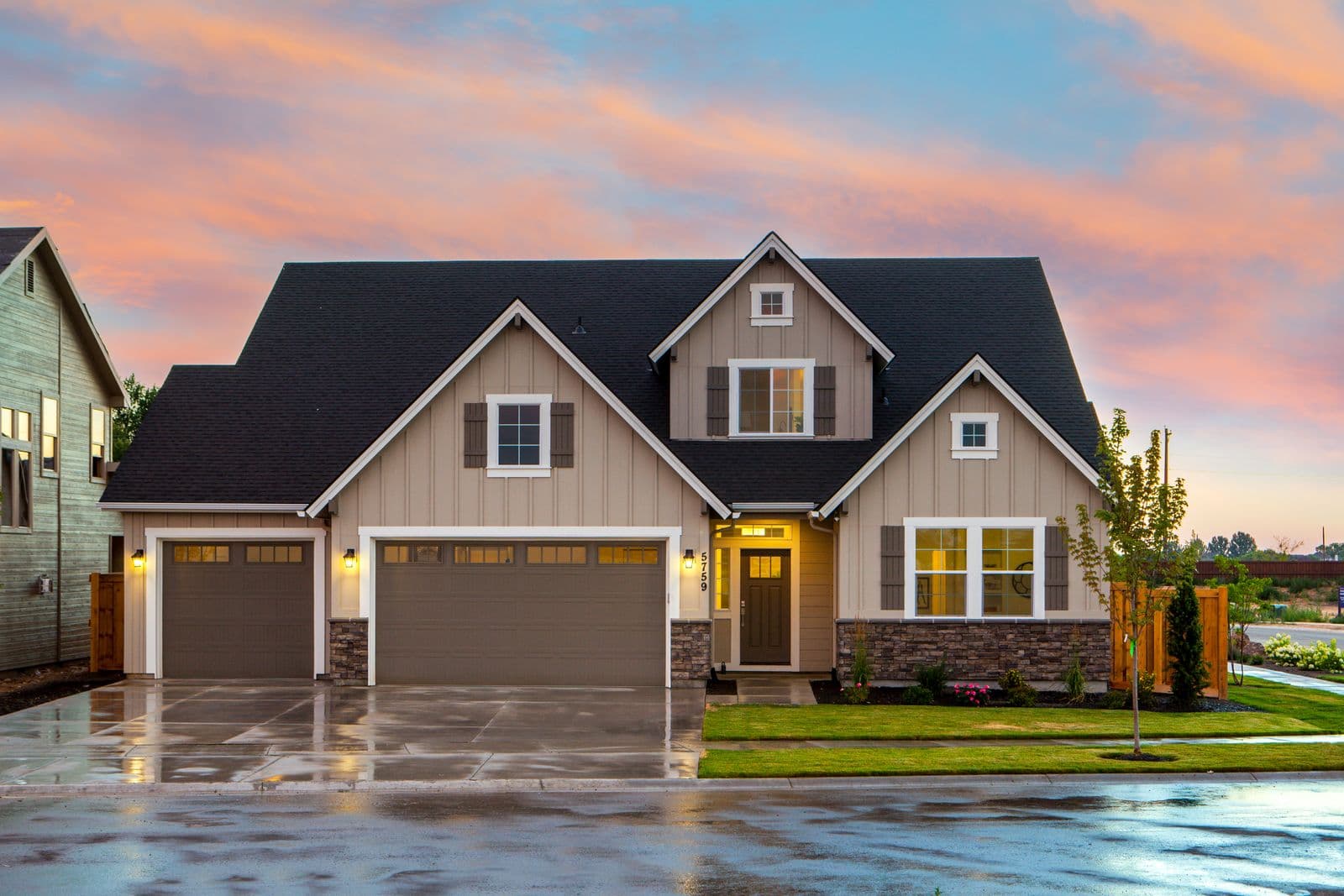
California voters approved Proposition 37 on November 3, 2026. Unofficial results, the CalHFA second mortgage for qualified new homes, eligibility, price caps, and what is still not open. Educational only.
California voters approved Proposition 37 at the November 3, 2026 statewide general election. The official ballot title is “Creates Loan Program for Middle-Income Buyers of Qualified New Homes. Initiative Statute.” The measure’s own name, in the text of the proposed law, is the California Middle-Class Home Ownership and Family Home Construction Act of 2026.
This guide is for buyers, sellers, and families in Diamond Bar, the San Gabriel Valley, San Bernardino County, and the Inland Empire. It explains what the unofficial count shows, what the voter guide and the text of the proposed law actually say, and what CalHFA still has to do before anyone can apply. It is education. It is not legal advice, tax advice, lending advice, or a statement that any person qualifies. Equal Housing Opportunity. NJV Realty follows federal and California fair housing law.
The loan program is not open. Do not plan a closing around a payment, a rate, or an approval that no lender has issued.
Did Proposition 37 pass?
Yes, on the unofficial tally. The California Secretary of State election-results page, reviewed for this article on November 6, 2026, showed Proposition 37 as Yes. The snapshot on that page was timed 5:23 p.m., with all 23,860 precincts partially reporting: Yes 5,711,983 votes, 61.8 percent, and No 3,536,401 votes, 38.2 percent.
Those numbers are unofficial. The same page says results will be certified by December 11, 2026, and that vote-by-mail, provisional, and other ballots continue to be counted during the canvass. The totals will change. A later county report can raise both the Yes count and the No count. Percentages can move even when the lead does not.
Newsrooms and the Associated Press called the race on election night or soon after, using their own counts. Those calls are not the Secretary of State statement of the vote. Different sites will show different totals on the same day because they freeze a count at different hours. Use https://electionresults.sos.ca.gov/returns/ballot-measures for the official unofficial statewide tally. Use the county reporting status on that site before you quote a county number.
A majority of votes cast is what an initiative statute needs. The unofficial margin is large. Until the Secretary of State files the statement of the vote, the canvass is not finished.
What the official summary says the measure does
The Attorney General title and summary in the Official Voter Information Guide says Proposition 37 authorizes up to $25 billion in bonds to offer eligible buyers fixed-rate mortgages for up to 17 percent of the purchase price of a qualified new home. A qualified new home is new construction, or the first sale of converted nonresidential property, priced below about $1 million to $1.5 million depending on the county, adjusted annually.
The same summary says borrowers must be California residents for one year, occupy the home, earn less than twice the area median income, and pay at least 3 percent down. It says the bonds are repaid by homeowners’ mortgage payments, not by the State. The Legislative Analyst’s fiscal estimate is no direct state or local costs.
The quick-reference guide uses shorter wording and describes the home as a newly constructed home priced below about $1.5 million. Where the short guide and the title-and-summary page differ in emphasis, read both, then read the text of the proposed law. The text is the detailed rule set. It is posted with the voter guide at https://vig.cdn.sos.ca.gov/2026/general/pdf/prop37-text-proposed-laws.pdf and linked from https://voterguide.sos.ca.gov/propositions/37/analysis.htm.
The Legislative Analyst’s analysis is at https://voterguide.sos.ca.gov/propositions/37/analysis.htm and in the LAO file https://lao.ca.gov/ballot/2026/prop37-110326.pdf. This article follows those sources. It does not restate every cross-reference in the construction-defect sections.
The loan, in plain language
The program the statute creates is called the Middle-Class Home Ownership Loan Program. CalHFA, the California Housing Finance Agency, would administer it. Each program loan is a middle-class home ownership loan, secured by a secondary mortgage on a qualified new home. The text says that loan finances no more than 17 percent of the purchase price, and that it is subordinate to the primary mortgage.
The buyer still gets a first mortgage from a lender for most of the price. Proposition 37 does not replace that first loan, and it does not set the first loan’s rate, term, or mortgage-insurance rules.
The text caps the principal amount of bonds issued for the program at $25 billion. Refunding bonds are not counted against that cap. CalHFA decides how much to issue, when to issue it, and whether to sell bonds regionally or statewide. The agency is allowed to issue up to the cap. It is not required to issue the full $25 billion.
The purpose language in the measure describes the loans as a way to support below-market interest rates, and it tells CalHFA to set interest rates, amortization, and other payment terms at levels that are practical and favorable to applicants while still paying the bonds and the agency’s administrative costs. The Legislative Analyst says CalHFA must keep interest costs for homebuyers as low as possible. None of that language is a rate. No rate is stated in the voter guide. A blog cannot invent one.
It is a second mortgage, not a grant
The buyer repays the program loan. The Legislative Analyst describes existing CalHFA down-payment programs the same way: they are loans that must be repaid under the program’s terms. Proposition 37 is in that family. It is not a gift, a closing-cost grant, or a forgiveness program.
Monthly payments on the program loan are designed to repay bond investors over time and to cover administrative costs. The face of each bond must say that the bond is not a debt, liability, or pledge of the faith and credit of the State of California, other than the agency, and that it is payable solely from the funds provided for that purpose.
A borrower may request a temporary hardship deferral of monthly interest payments. The criteria and the terms are left to CalHFA. A request is not an approval, and this article does not describe a deferral as available today.
There is a consumer-protection section in the text. Program loans must be fixed-rate. Lenders CalHFA contracts with are prohibited from charging an early-payment penalty. A lender originating one of these loans may charge an origination fee of no more than 0.5 percent or $290, whichever is greater. The agency may adjust that $290 figure no more than once every two years. The lender shall not charge any other loan fee unless the agency authorizes it. Those limits apply to the program loan. They do not cap fees on the first mortgage.
Who the statute says can qualify
The text of the proposed law, at the borrower-eligibility section, requires all of the following. CalHFA may add other eligibility requirements on top of this list.
The applicant must have been a California resident for at least one year before applying. The applicant must agree to occupy the qualified new home as a primary residence within 60 days of closing. Family income must not exceed 200 percent of area median income for a family of the same size in the county or metropolitan statistical area where the home is located, with family-size adjustments set by the agency. The applicant must agree to pay at least 3 percent of the purchase price from a source other than a grant or borrowed money.
The Attorney General summary says “earn less than twice the area’s median income.” The statute says income that “does not exceed 200 percent.” Those are the two official wordings. Use the statute once it is in effect, and use the tables CalHFA publishes for household size and geography. Do not treat a statewide dollar figure as the limit. Riverside, San Bernardino, Los Angeles, and Orange County limits will not be the same number, and they change when median income changes.
The applicant must also retain a licensed California real estate agent or broker, as defined in Business and Professions Code section 10018.06, selected by the applicant. The statute does not name a brokerage. The buyer chooses the licensee.
Meeting this list on paper is not an approval. The agency sets underwriting, and it may set minimum credit standards or debt-to-income ratios, including standards aligned with Fannie Mae, Freddie Mac, or FHA, if those standards stay consistent with the chapter. If a credit score would otherwise block the applicant or block the most favorable terms, the lender must let the applicant voluntarily submit bank statements, pay stubs, assets, and rental history for a cash-flow review. Voluntary submission is consent to use those records for that review. It is not a promise of approval.
CalHFA must also set a homeowner-education requirement for borrowers it decides would benefit, including first-time buyers, if that requirement can be finished inside the closing timeline.
The 3 percent cannot be a grant or a borrowed down payment
This is the point most easy to miss. The 17 percent program loan and the buyer’s 3 percent are different money. The statute says the 3 percent comes from a source other than a grant or borrowed money. A person cannot satisfy that 3 percent by borrowing it, and cannot satisfy it with a grant.
CalHFA still has to say which funds it will accept. A family gift might or might not fit, depending on those rules and on the first-lien lender. Do not assume a gift, a builder credit, or the program loan itself counts as the 3 percent. Ask in writing when rules exist. Until then, the safe reading is the sentence in the statute, not a lender advertisement.
People sometimes add 17 percent and 3 percent and call the result a 20 percent down payment that removes private mortgage insurance. The text does describe the program loan as financing a portion of the price ordinarily covered by the down payment, with the buyer putting in at least 3 percent. Mortgage insurance is still controlled by the first-lien lender, the loan program, and the appraisal. If CalHFA later allows part of the program loan to cover closing costs, the equity stack can look different from a clean 20 percent. Do not promise yourself that mortgage insurance will be waived.
What counts as a qualified new home
The statute defines a qualified new home as either of two products, and in both cases the borrower must be the first purchaser.
The first is a newly constructed home, townhome, row house, condominium, or manufactured home. The measure’s definition of a single-family home is broad: a stand-alone home, townhome, or row house, including the land, or a condominium, manufactured home, or other residential unit intended for one household.
The second is a condominium or other residential unit in a building that used to be nonresidential and was retrofitted or repurposed for residential use, again where the borrower is the first purchaser.
A typical resale does not fit. If the home has already been sold once as a residence, a later buyer is not the first purchaser. An Inland Empire listing that has traded on the open market is outside this program even if the buyer meets the income test. New construction in Corona, Eastvale, Chino Hills, Ontario, Fontana, or unincorporated San Bernardino County is the kind of product the statute is aimed at, and only if that specific home also meets the price cap and the first-purchaser test. A city name does not make a house eligible.
The text says a qualified new home is not a public work for a specified chapter of the Labor Code. That is a legal classification inside the measure. It is not a comment on construction quality, and it is not a rule a buyer has to apply at the kitchen table.
The price cap is a formula, not one statewide number
The maximum sales price shall not exceed 125 percent of the conforming loan limit for a one-unit property in the county where the home sits. The limit is the one in the annual conforming-loan-limit report from the Federal Housing Finance Agency, or a successor, under 12 U.S.C. section 4542.
The Attorney General summary translates that formula into “about $1 million to $1.5 million, depending on county, adjusted annually.” That range is the official plain-language description. It is not a table of county caps, and it will move when FHFA resets conforming limits. Los Angeles County and a lower-cost inland county will not share one cap. Before anyone relies on a dollar figure, read the current FHFA county limit and multiply carefully, then confirm the figure CalHFA publishes once the program has rules.
Homes can still be built and sold above the cap. The statute says it does not restrict sales to buyers who are not in the program. A builder who sells a qualified-builder home for more than 25 percent over the maximum sales price loses specified construction-defect procedures for that home. That is a builder and buyer disclosure issue, not a reason to stretch a budget.
What CalHFA still has to do, and why there is no opening date
The statute orders CalHFA to implement the program no later than one year after the effective date of the act. Under the California Constitution, an approved initiative statute takes effect on the fifth day after the Secretary of State files the statement of the vote, unless the measure itself sets different timing. This measure does not set a different effective date. It then allows up to a year after that date for implementation.
Certification is due by December 11, 2026. It can be filed earlier. Until that statement is filed, there is no effective date to put on a calendar, and the one-year implementation deadline has not started. Even after it starts, “no later than one year” is a deadline to implement, not an announcement that applications open on a given morning. CalHFA has to adopt rules, approve forms, contract with lenders, set rates and underwriting, and decide how many bonds to sell. None of those documents exist as a public program guide on the day this article is published.
The agency also decides closing-cost rules. It may allow a borrower to use the program loan for closing costs on the full purchase if the agency finds that the rule balances borrowers and bond investors. That permission is not in effect now, because the rule has not been adopted.
Do not send an application, and do not let a salesperson tell you the program is taking names, unless the instruction is on an official CalHFA page you can read yourself. This article will not invent a portal, a phone number for the program, or a launch day.
How the bonds are repaid
These are revenue bonds, not general-obligation bonds. The Legislative Analyst explains the difference. General-obligation bonds are usually repaid from the state General Fund. Revenue bonds are repaid from fees or other payments by the users of what was financed. Here, the users are the borrowers on the program loans.
The fiscal label on the ballot is no direct state or local costs. The Analyst also lists effects that are unknown: whether investors want to buy the bonds, how the cost of these loans compares with other down-payment help, and whether the program actually leads to more homes being built and bought. Those unknowns are part of the official analysis. They are not a reason to vote again, and they are not a forecast from NJV Realty.
The official quick-reference guide listed supporters, including the United Nurses Associations of California, the California Conference of Carpenters, and State Treasurer Fiona Ma. It listed no opponent argument as submitted. Campaign claims about taxpayer risk, or about zero taxpayer risk, are arguments. The document that binds the fiscal description is the Legislative Analyst estimate: no direct state or local costs, with the other effects marked unknown.
The qualified builder option, briefly
Any developer can build a home that an eligible buyer purchases under the basic rules. Separately, a developer may volunteer for a qualified builder option. Participating builders take on higher labor and enforcement standards described in the text. In exchange, those homes use a different right-to-repair path for construction-defect claims. The differences include a more specific notice, limits on how long a case can sit after a stay, a written disclosure to the buyer before close of escrow in a form CalHFA approves, and a cap on attorney contingency fees in related cases unless a court allows more.
For a buyer, the practical step is to read the purchase contract, the warranty, and any builder disclosure, and to ask your own licensee and, if you need it, your own construction attorney what procedures apply to that house. A ballot measure is not a warranty. NJV Realty does not decide whether a builder’s participation letter is valid. The text says the agency is supposed to confirm a builder’s certification with a letter, and that the letter may be relied on for marketing and financing, subject to the rest of the chapter. Ask to see it when you are actually in contract on a new home, after the program exists.
What this does not do
It does not open a loan desk on election night, or on the day of this article. It does not cut the price of resale homes. It does not pay your first mortgage, your property taxes, your insurance, or your HOA dues. It does not promise a rate, a payment, or mortgage-insurance relief. It does not make a buyer qualified because household income feels “middle class.” The test is the statute’s 200 percent of area median income for that family size and that county or metro area, plus CalHFA underwriting that is still unwritten.
It does not let the buyer skip a licensed California agent or broker. It does not let the 3 percent come from a grant or from borrowed money. It does not require CalHFA to sell all $25 billion of bonds. It does not pledge the faith and credit of the State of California, other than the agency, for those bonds.
It also does not tell you how to vote on a future measure, and NJV Realty does not endorse ballot measures in this series. The election on this measure has already been held.
Inland Empire, San Bernardino, and Diamond Bar
Most of the homes people tour in Diamond Bar, Walnut, Chino Hills, and older parts of Corona are resales. Those homes are outside a first-purchaser program. The buyers who should study Proposition 37 are the ones comparing a new-home contract with a resale, especially in communities where builders are still releasing homes.
A new-home sticker under the county price cap is only the start. Model homes leave out lot premiums, design-center bills, HOA dues, mello-roos or other local assessments, insurance, and the time from contract to completion. The program loan, if it exists when that home is delivered, would add a second payment. Build the full monthly cost before you treat 17 percent as affordability.
San Bernardino County’s unofficial share of the statewide vote is on the Secretary of State county reports, and it will move during the canvass. A news site’s county table is a snapshot. It is not a reason to assume a High Desert or valley new-home community is inside the program. Eligibility is house by house and buyer by buyer.
If you are shopping now, get a first-mortgage pre-approval from a licensed lender for the purchase you can make without this program. Keep Proposition 37 as a possible later tool for a qualified new home, not as the plan that holds your offer together.
Questions to ask when rules are actually published
Is this home a qualified new home, and am I the first purchaser? What is the county price cap on the day I write the contract, using the FHFA limit and CalHFA’s table? Does my household income fall under 200 percent of area median income for this family size and this county or metro area, on the table the agency is using?
Where is the 3 percent coming from, and is that source something other than a grant or borrowed money under the agency’s rules? What is the rate, term, and payment on the program loan, in writing? What is the rate, term, payment, and mortgage insurance on the first loan, in writing, with both loans in the same estimate?
Does the first-lien investor allow this second mortgage? What happens to builder incentives if I use a lender other than the builder’s preferred lender? What disclosure did the builder give about construction-defect procedures? Can I occupy the home as my primary residence within 60 days of closing?
If any answer is missing, you do not have a program loan. You have a sales conversation.
Shorter updates through the end of December
NJV Realty will publish a shorter update once a week through the last week of December 2026. Each one stays off the site until its date, so a later article does not pretend that a later event has already happened.
November 13: how to read the unofficial count, and why news sites disagree. November 20: how this second mortgage differs from a grant. November 27: the buyer checklist in the statute. December 4: qualified new homes and the price-cap formula, with an Inland Empire reading. December 11: what the certification deadline means on the day it falls due. December 18: the work CalHFA still has to finish. December 25: a year-end planning note for Diamond Bar and Inland Empire buyers while the program remains closed.
If the Secretary of State updates the tally before one of those dates, the update will point you back to the live results page rather than invent a new certified total. The long guide you are reading is the place we will keep the November 6 baseline.
Sources
California Secretary of State, unofficial state ballot-measure results, snapshot November 6, 2026, 5:23 p.m.: https://electionresults.sos.ca.gov/returns/ballot-measures. The page states that results will be certified by December 11, 2026.
Official Voter Information Guide, Proposition 37 title and summary: https://voterguide.sos.ca.gov/propositions/37/title-summary.htm. Quick reference: https://voterguide.sos.ca.gov/quick-reference-guide/37.htm. Legislative Analyst analysis: https://voterguide.sos.ca.gov/propositions/37/analysis.htm. LAO PDF: https://lao.ca.gov/ballot/2026/prop37-110326.pdf. Text of the proposed law: https://vig.cdn.sos.ca.gov/2026/general/pdf/prop37-text-proposed-laws.pdf.
An August 8, 2026 article on this site explained the measure before Election Day. Its opening now points here. Prefer this page, and the official links above, over any sentence that still describes the election as unfinished.
How NJV Realty can help
We search live listings, compare new construction with resale, and coordinate with the licensed lenders and other professionals our clients choose. We will not tell you that you qualify for a program CalHFA has not opened, and we will not guess a rate.
NJV Realty, California DRE #02446814. Responsible Broker Jessica Chen Valmores, DRE #02013597. Nick Angelo Valmores, DRE #02204173. Office: 1370 Valley Vista Drive, Suite 200, Diamond Bar, CA 91765. Call (909) 839-3971 or write [email protected]. Equal Housing Opportunity.
Related local guides
- Diamond Bar real estateDiamond Bar homes — hillside views & OC/LA access
- Homes for sale in Diamond Bar
- Sell your home in Diamond Bar
- Mandarin-speaking realtor — Diamond Bar
- Chino Hills real estateChino Hills luxury homes & hillside neighborhoods
- Homes for sale in Chino Hills
- Sell your home in Chino Hills
- Corona real estateLuxury homes & expert representation in Corona
- Homes for sale in Corona
- Sell your home in Corona
- Eastvale real estateEastvale real estate — new construction & family neighborhoods
- Homes for sale in Eastvale
- Sell your home in Eastvale
- Riverside real estateRiverside real estate — historic charm to modern estates
- Homes for sale in Riverside
- Sell your home in Riverside
Questions about buying or selling? NJV Realty is headquartered in Diamond Bar and serves Los Angeles, the Inland Empire, Corona, Eastvale, Norco, Riverside, Temecula, Murrieta, and surrounding cities.